Personas & Buying Journeys
Most B2B purchases aren’t made by one person. A user feels the problem. An influencer shapes the options. A gatekeeper checks the risk. A decision maker signs. And a budget owner asks what it’s all worth. Each of them does most of their research alone, long before they talk to sales. My job is to make sure every one of them finds the right answer, in the right form, the moment the question comes up. That means understanding what moves each person, emotionally and factually, from first recognizing a problem to trusting a solution.
STEP 1: Agree to buying stage definitions
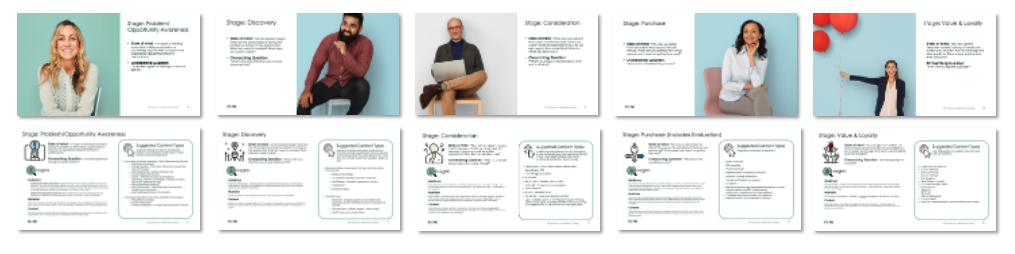
Before anyone writes a word, everyone needs to agree on what a “stage” actually means. Sales, product marketing, customer success, and marketing ops often describe the same buyer four different ways, and content falls through the gaps between them. I bring those teams together to define each stage in plain terms: what the buyer is thinking, what they need to move forward, and how we’ll know they have. The result is one shared map. A handoff from marketing to sales to customer success feels like the next step, not a restart. (Yes, this is where the wet-cat juggling comes in.)
What success looks like: Three-time ServiceNow Silo Buster Award winner for getting marketing, sales, and product teams working from the same playbook.
STEP 2: Map ICP buying groups & their learning paths
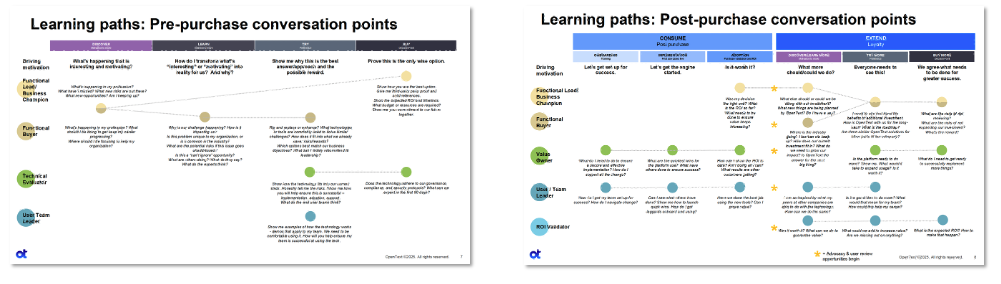
A buying group doesn’t show up all at once. The user feels the problem first. IT joins when integration comes up. Finance appears when it’s time to talk cost. The champion keeps coming back long after the deal closes. I map each role’s learning path: the questions they ask, the moment they ask them, and what earns their trust. Whoever steps in, whenever they step in, the right answer is already waiting, from first curiosity through renewal and advocacy.
What success looks like: At OpenText, I mapped experience pathways for complex buying groups across 9 product and solution categories.
STEP 3: Plot topic strategy and content plan to support the learning paths
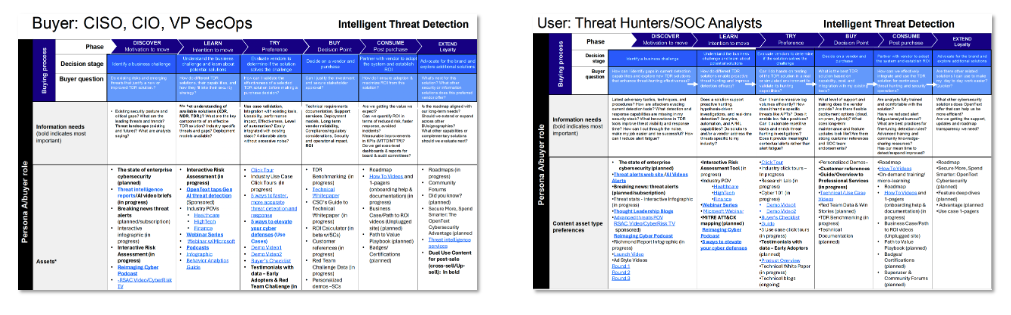
Topic first, format second. I start with what each person on the path needs to understand. Then I decide how to deliver it, based on where they spend time and how they like to learn. A technical lead may want a detailed guide, and a busy executive may want a two-minute video or one sharp stat in their feed. One well-researched topic becomes a set of connected assets, each built for its audience and channel, all telling the same story. That means less content that goes unused, and more that does its job.
What success looks like: ServiceNow’s Put AI to Work program used one story for four audiences across three journey stages, built on shared base content and personalized by role.
STEP 4: Create the plan to get the content created and promoted
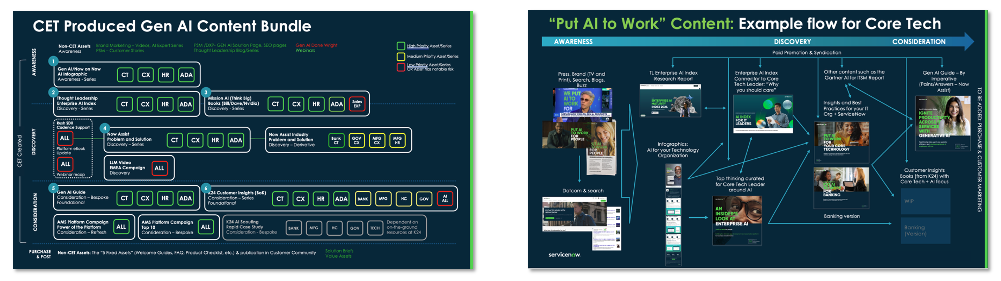
A great content plan is only as good as the team and timeline behind it. I turn the topic map into a production plan everyone can see: who writes, who designs, who reviews, and when each piece is due. Long-form anchor assets come first, then the emails, social posts, videos, ads, and blogs built from them, so nothing launches alone. Every piece ships with a promotion plan already in place: which channels, in what order, for which part of the buying group. And every piece has a number attached, so we know what’s working and can do more of it.
What success looks like:
- At ServiceNow, I built an in-house content model producing 150+ long-form assets a year. It cut about $1.5M in annual agency spend.
- At Firstup, I led 12 integrated campaigns in seven months and beat pipeline targets by 12% in Q2 and Q3.

